
The Quick Version
Colorado Springs sits in one of the most hail-active corridors in the country. Peak season runs June through August, and a single storm can leave damage that is invisible from the ground but causes serious problems over time. This guide covers what to check after a hail event, the difference between cosmetic and structural damage, and how to decide when a professional inspection is worth scheduling.
- Granule loss on asphalt shingles
- Dents, cracks, or bruising in roofing material
- Damaged flashing, vents, and skylights
- Gutter and downspout impacts
- Siding and window damage
- When to call a pro vs. wait and watch
Colorado Springs homeowners know hail comes with the territory. The Front Range is one of the most hail-active regions in the country, and El Paso County sees multiple significant storm events most summers. What a lot of homeowners do not fully appreciate is that hail damage to a roof does not always announce itself right away. A storm can leave real structural damage with no visible interior signs for months, until the next heavy rain or the following winter reveals it as a leak.
This guide is not about filing an insurance claim or navigating storm chasers. It is about what to inspect after a hail event and how to evaluate what you find.
Wait Until the Storm Has Fully Passed
Do not go outside to assess damage while hail is still falling or lightning is still in the area. Once the storm has cleared and it is safe to move around outside, start your assessment from the ground before considering getting on the roof.
Ground-level observation tells you more than most homeowners expect. Look for dents in gutters and downspouts, which are the most visible early indicators that hail was large enough to cause surface damage. Check vehicles in the driveway for dings — they serve as a useful size reference. Look at your AC condenser coils and any painted metal surfaces for impact marks. These are all visible from grade and give you a preliminary sense of storm severity before you get eyes on the roof itself.
What to Check on the Roof
If you are comfortable getting on your roof safely, or if you have a single-story home where you can see much of the surface from a ladder, here is what to look for. If the pitch is steep or you are not comfortable with heights, this is a job for a professional assessment.
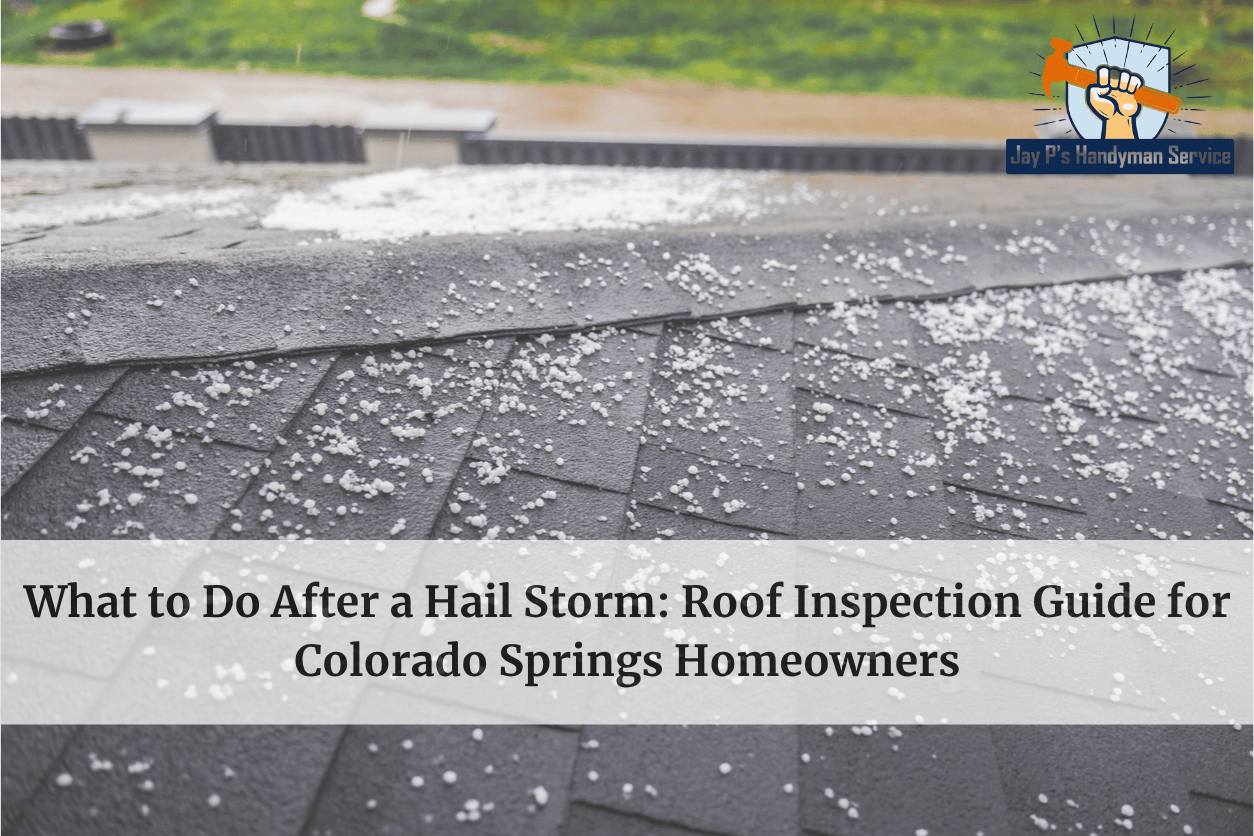
Granule loss on asphalt shingles. Hail impact knocks the protective granule coating off asphalt shingles. You may see bare or dark spots on individual shingles, or an accumulation of granules in your gutters and at the base of downspouts after a storm. Some granule loss is normal over time, but concentrated loss from a hail event accelerates shingle aging significantly. The underlying asphalt is now exposed to UV and moisture without its protective layer.
Impact marks, bruising, or cracking. On asphalt shingles, significant hail impacts leave circular marks that may look like dark spots or depressions. The shingle may feel soft or spongy at the impact point when you press on it, indicating the mat beneath the surface has been fractured. On wood shakes, look for splits along the grain. On metal roofing, look for dents — generally visible and worth documenting even if they do not immediately compromise waterproofing.
Flashing, vents, and skylights. Check all transition points where flashing is used, including around chimneys, pipes, and where the roof meets vertical walls. Hail can dent and displace flashing, breaking the seal. Plastic vent covers can crack. Skylight frames and glazing can be damaged. These are the areas most likely to become active leak points if left unaddressed.
Ridge caps and valleys. The ridge cap runs along the peak of the roof and takes direct hits from hail. Valley areas, where two roof planes meet, are also high-impact zones. Check both for visible damage and displaced material.
Gutters and Downspouts
Gutters are useful diagnostic tools after a hail storm because they show damage clearly. Look for dents along the face of gutters, particularly at the leading edge. A significant dent pattern across the gutter run tells you the hail was large enough to cause surface damage elsewhere. Check that gutters are still properly attached to the fascia and have not been knocked loose by impact or the weight of hail accumulation. Clean gutters after the storm and check how much granule material has washed into them.
Siding and Windows
A thorough post-hail assessment includes more than the roof. Walk the perimeter of your home and check siding for impact marks, cracks, or punctures. Vinyl siding shows hail damage clearly as circular cracks or holes, usually more visible on the south and west-facing sides of the home, which tend to take the most direct impact from Colorado’s afternoon storm pattern. Wood and fiber cement siding can chip, dent, or fracture.
Check window frames and screens for dents, and look at the caulking line around windows for any separation caused by impact vibration. Damaged caulk around windows may not look serious on its own, but it is an entry point for water, especially as it dries and pulls away from the frame through the rest of the summer.
The Problem With Waiting Too Long
Hail damage does not always produce immediate leaks. A shingle with a fractured mat and significant granule loss may hold water out through the rest of the summer, only to fail during the following spring snowmelt when water sits on the roof for extended periods. By the time the leak shows up on an interior ceiling, the damage trail typically includes not just the roofing material but also the decking, insulation, and potentially framing members depending on how long water has been finding its way in.
This is why a professional inspection shortly after a significant hail event matters even if your roof appears intact from the ground and you have no interior signs of damage. An experienced eye on the surface can identify granule loss patterns, bruising, and flashing displacement that ground-level observation will miss entirely.
What a Professional Inspection Covers
A good roof inspection after a hail storm is not a sales call. It is a methodical assessment of the roofing system that documents what was found and gives you an honest picture of the condition. That includes surface damage to shingles or roofing material, flashing integrity, decking condition where accessible, gutter and attachment points, and any penetrations or transitions that may have been affected.
The result should answer two questions clearly: is there damage that requires repair now, and is there damage that is likely to cause problems if left unaddressed? Those are different categories and a straightforward inspector treats them as such.
If you want a practical, no-pressure assessment after a storm, Jay P’s provides roof inspections and repair throughout Colorado Springs. If your home took visible damage in other areas during the same storm, the exterior services page covers siding, windows, fencing, and more. Call (719) 922-4575 to schedule.