
Quick Overview
Summer in Colorado Springs brings intense UV, afternoon hail, low humidity, and wide temperature swings. This checklist covers the exterior and interior maintenance tasks that matter most for El Paso County homeowners heading into the season.
- Deck inspection and sealing
- Fence condition and post stability
- Siding and exterior paint
- Window seals and caulking
- Roof inspection after hail season
- Concrete walkways and driveways
- Gutters and drainage
- Doors and weatherstripping
Colorado Springs summer is harder on homes than most homeowners realize. The UV index at 6,000 feet is measurably higher than at sea level. Afternoon hailstorms can arrive with little warning. The freeze-thaw cycle that ran all winter left its mark on concrete, fencing, and exterior wood. Low humidity dries out caulk, sealant, and wood faster than in most other climates.
Working through a maintenance checklist in early summer — before the hottest stretch and before hail season peaks — is the most cost-effective thing you can do for your home. Small problems addressed now stay small. Left alone, they compound.
Here is a practical checklist for Colorado Springs homeowners in 2026.
Walk the Exterior First
Before getting into individual items, do a full perimeter walk. You are looking for anything that changed over winter and spring — wood that shifted, paint that started to peel, gaps that opened around windows or doors, fence sections that are leaning or loose. Colorado’s freeze-thaw cycle is hard on exterior materials, and a 20-minute walk tells you what to prioritize before you spend a dollar on anything.
Deck
Walk every board and pay attention to what you feel underfoot. Boards that flex, feel soft, or have any give where they should be solid have deteriorated past the point where surface treatment helps — they need to be replaced. Check the ledger board where the deck attaches to the house for signs of moisture damage or separation. Push on every railing connection; loose railings are a safety issue.
For the surface finish, pour a small amount of water on a board. If it soaks in rather than beading, the sealant has failed. In Colorado’s dry, high-UV climate, most wood decks need fresh sealant every one to two years. Clean the surface thoroughly before reapplying — sealant bonded to dirt instead of wood will peel within a season.
Fence
Push firmly on every post. A post that moves at all has a compromised footing or a rotted base, and it will not improve on its own. Check post bases for soft or darkened wood, which signals rot working inward from the ground contact point. Walk the full fence run and look for boards that have cracked, cupped, or pulled away from the rails.
On gates, test the swing, the latch alignment, and the hinge hardware. A gate that drags, does not latch cleanly, or has visibly corroded hinges needs attention before the hardware fails entirely. Colorado’s climate accelerates metal corrosion at fence hardware faster than most homeowners expect.
Siding
Inspect the full exterior for boards or panels that have cracked, warped, or pulled away from the structure. Pay particular attention to corners, trim pieces, and areas around windows and doors — gaps develop there first. On painted siding, look for peeling or bubbling. At elevation, UV breaks down exterior paint faster than at sea level, and paint failure is how moisture gets behind the siding.
Check caulking at every penetration — pipes, vents, wires exiting the exterior wall. Caulk that has cracked or pulled away needs to come out and be replaced with a paintable exterior-grade product before summer thunderstorm season gets going.
Windows
Fogging or condensation between double-pane glass means the insulating seal has failed. The window is no longer performing at rated efficiency, and the only real fix is replacing the pane unit or the full window depending on frame condition.
Beyond seal failures, check the exterior caulking around every window frame. Colorado’s temperature swings and low humidity cause caulk to crack and shrink faster than in other climates. Summer is the right time to recaulk because proper adhesion requires dry conditions and temperatures above 50 degrees.
Test every window for smooth operation. A window that sticks or does not latch properly is worth addressing before winter, when you need them sealed tight and scheduling is harder.
Roof
Late spring and early summer are the peak hail season in El Paso County. Hail damage does not always produce immediate leaks. Granule loss and fractured shingle mats can allow water infiltration for months before anything shows up on an interior ceiling. By that point, the damage trail is longer and more expensive than it would have been with an early inspection.
If your area has experienced any significant hail in the past few months, an inspection is worth scheduling. From the ground, check gutters for accumulated granules, which are a reliable indicator that shingles took impact. Look at metal components like gutters and painted trim for visible dent patterns that confirm hail size.
Concrete
Colorado’s freeze-thaw cycle is hard on concrete. Water that enters a crack freezes, expands, and widens it. By summer, driveways, walkways, and patios commonly show cracking, spalling, or heaved sections at control joints. Small cracks can be filled with an exterior-rated concrete caulk while conditions are warm and dry. Larger sections that have heaved significantly may need more involved repair.
Heaved slabs at walkways and driveway aprons are also a trip hazard — worth addressing for safety reasons, not just appearance.
Gutters and Drainage
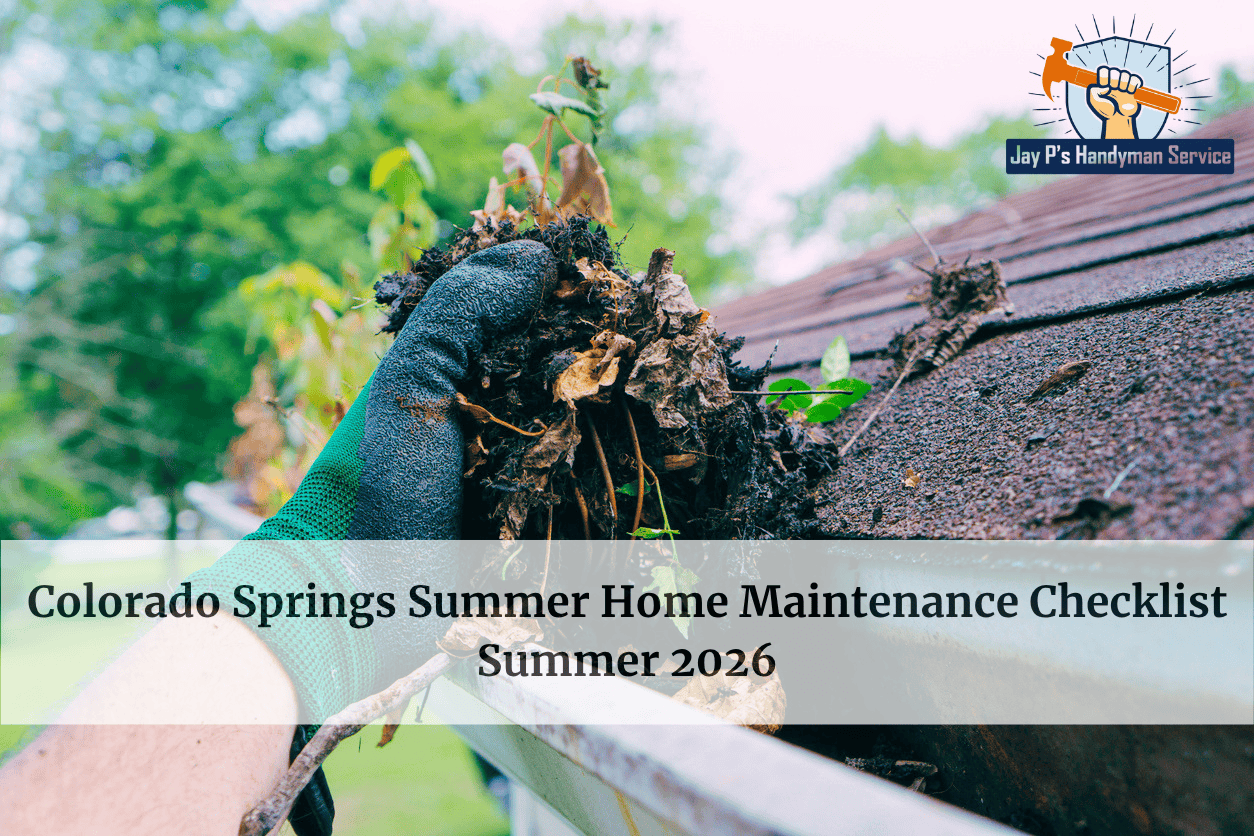
Colorado Springs afternoon thunderstorms can drop significant rain quickly. Gutters that are clogged, sagging, or pulling away from the fascia cannot move that water away from the foundation fast enough. Clean out spring debris — cottonwood fluff, pine needles, and seedpods are common in El Paso County. Confirm downspouts discharge at least four to six feet from the foundation.
Also check the grade around the foundation. Settled soil can create low spots that direct water toward the house rather than away from it.
Doors
Test every exterior door for smooth operation — open, close, and latch without forcing. Wood doors that absorbed moisture through spring may be swollen and sticking. Check weatherstripping all the way around each door and replace any sections that are compressed flat, torn, or missing. It is inexpensive work with a direct effect on energy efficiency and moisture resistance.
Interior Items Worth Adding
A few interior checks fit naturally into the same seasonal routine.
HVAC filter: Replace it before the hottest stretch of summer and schedule a service check if the system has not been looked at in over a year.
Ceiling fans: Switch blade direction to counterclockwise for summer so air pushes down rather than pulls up. Most fans have a small switch on the motor housing.
Smoke and CO detectors: Test every unit and replace batteries as needed. Homes with attached garages and gas appliances should be particularly attentive to CO detector function.
Attic ventilation: Colorado summers push attic temperatures extremely high, which degrades roofing materials from the inside and drives up cooling costs. Confirm ridge vents and soffit vents are clear and unobstructed.
When the List Needs a Pro
Some of these items are straightforward homeowner tasks. Others — post resets, siding repair, roof inspection, concrete work — take more time or experience than most people want to take on mid-summer. If anything on this list needs professional attention, Jay P’s Handyman Service covers exterior and interior repair work throughout Colorado Springs and El Paso County. Free estimates, no obligation. Call (719) 922-4575 or check the service area page to confirm coverage.